Is Mamori a medical device?
No. It is a concept, not a medical device, and it makes no medical claim. It would not replace a doctor, a carer or an emergency service.
Does it detect falls?
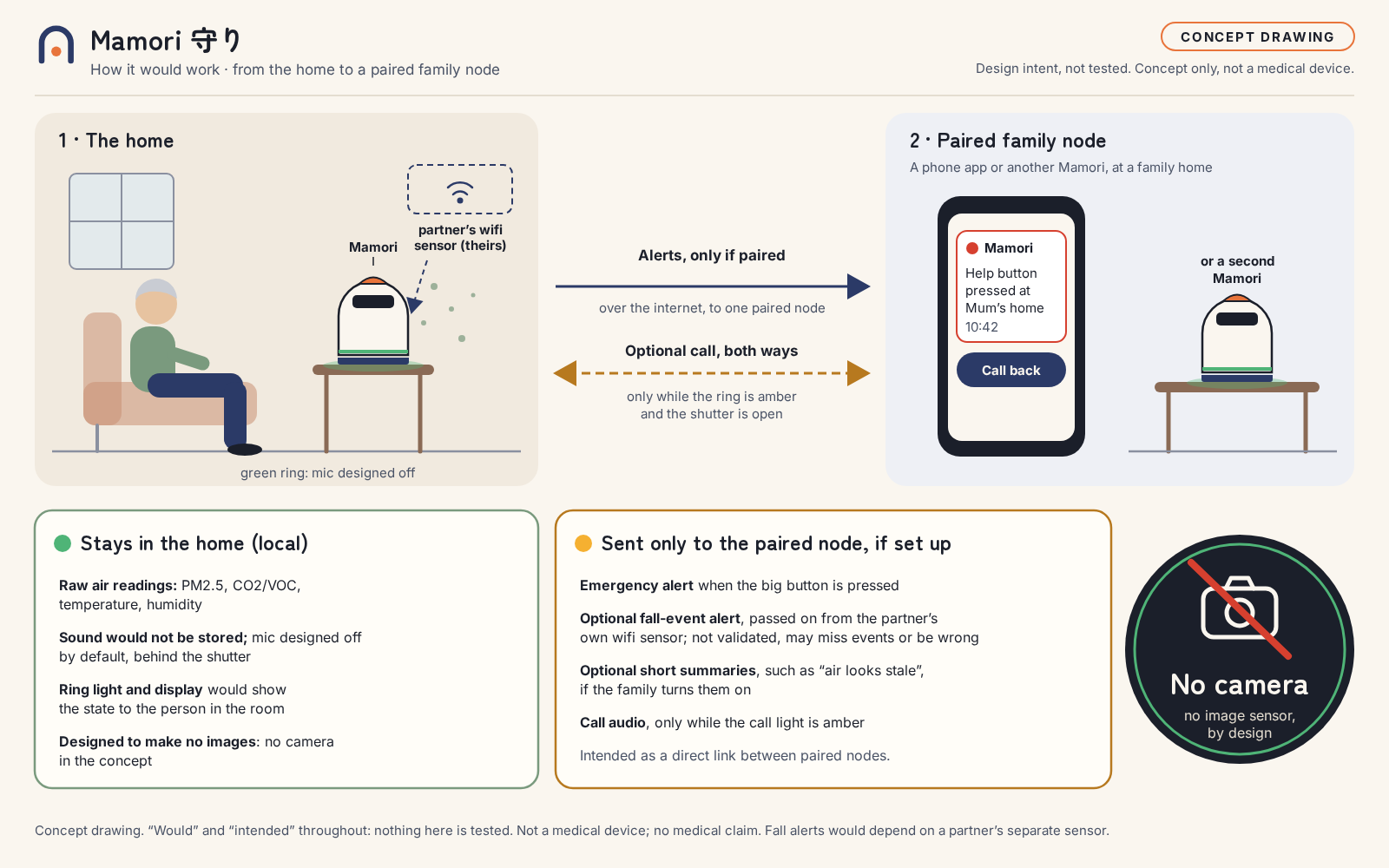
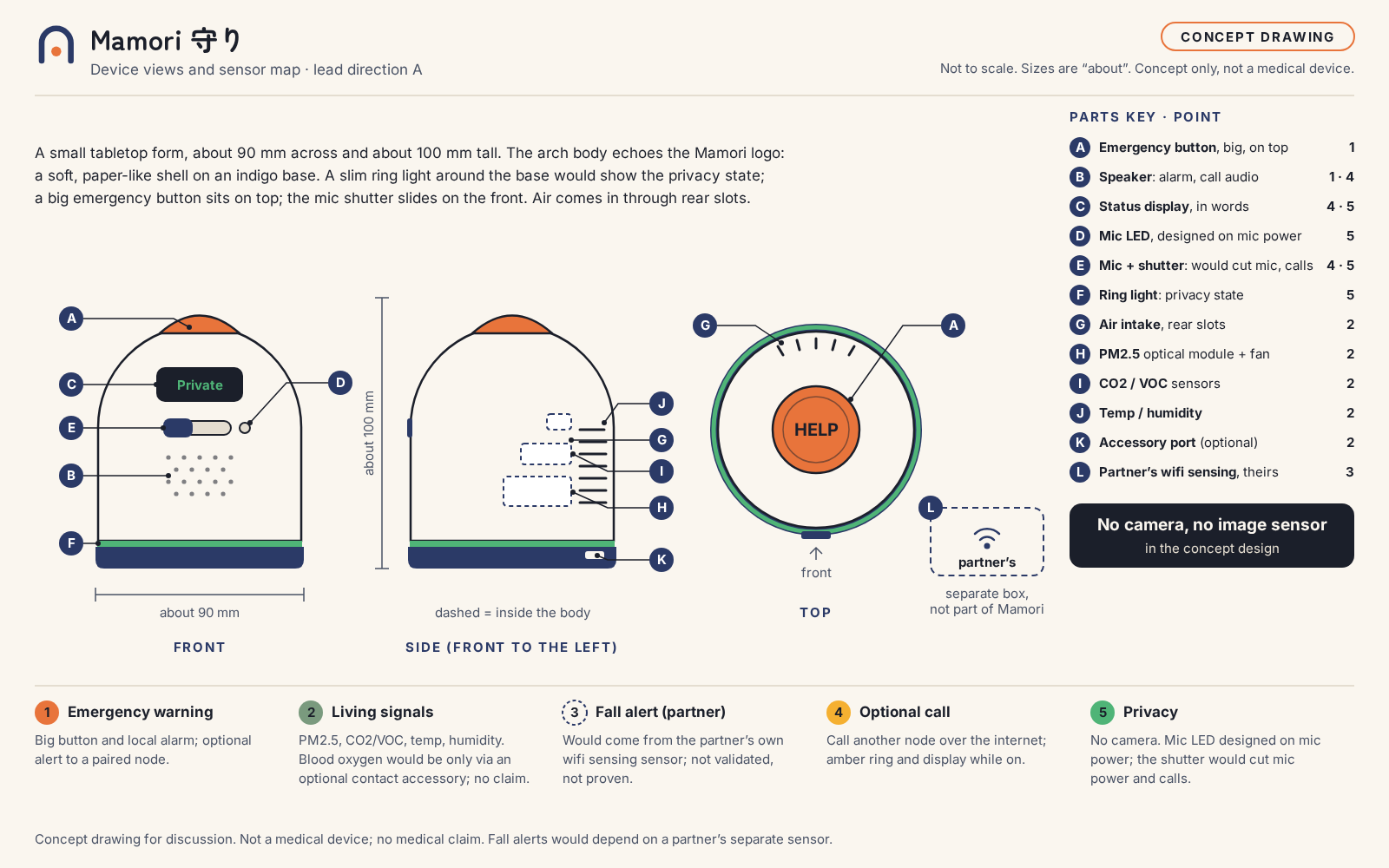
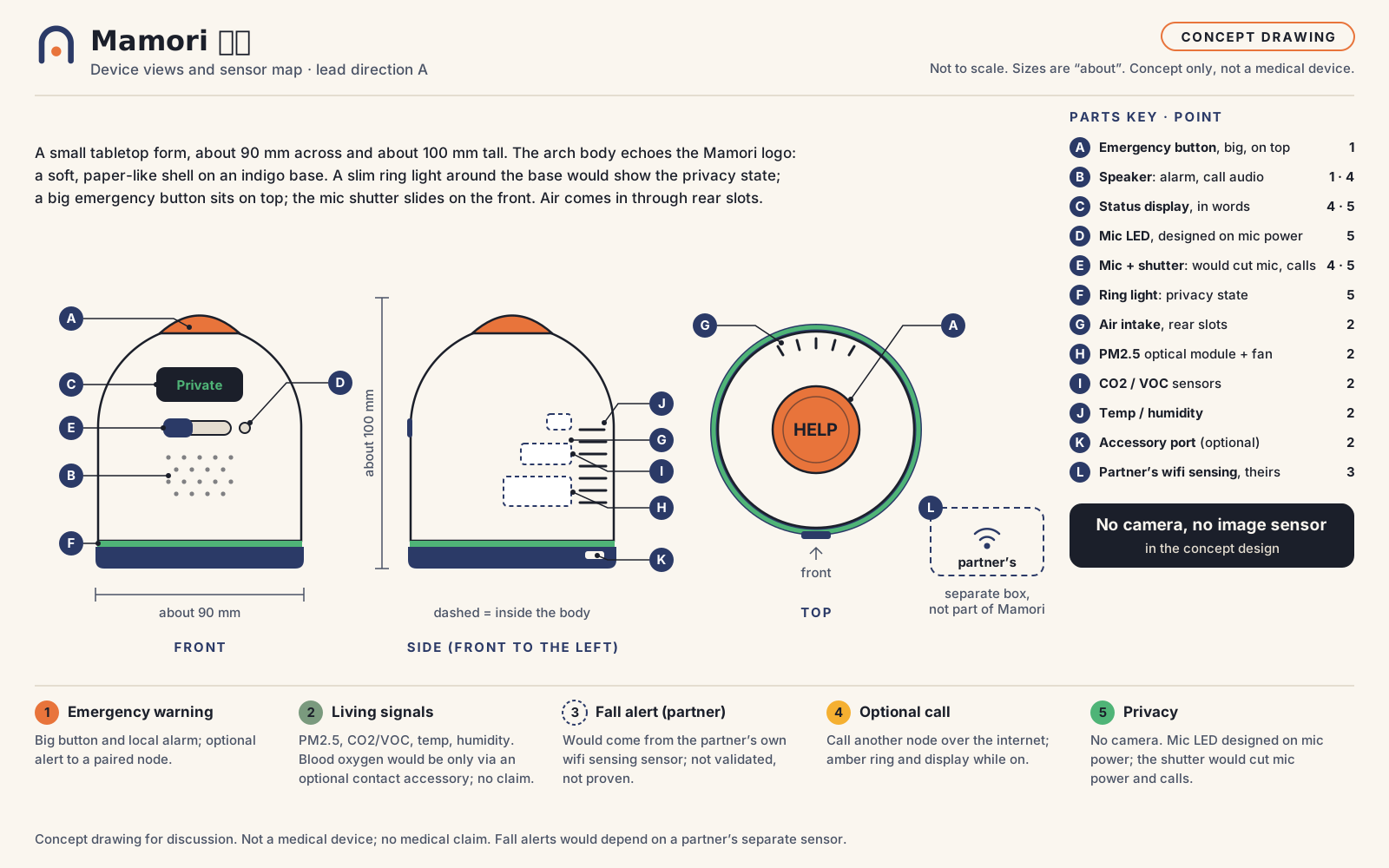
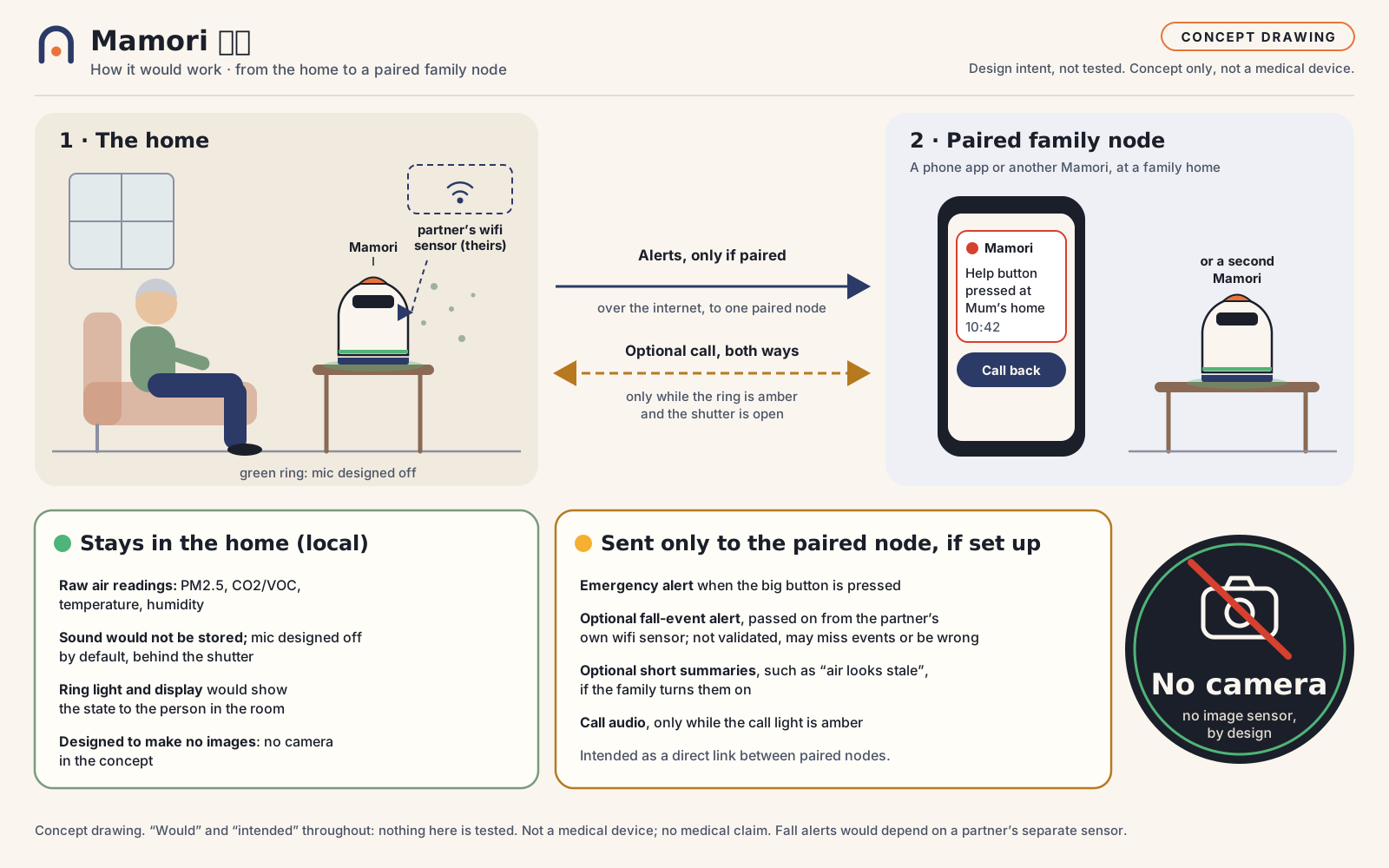
Mamori itself has no fall sensor. The idea is that a partner’s own wifi sensing sensor, a separate box, could raise a fall-event signal, and Mamori would pass it on to the paired node. That has not been validated: it may miss real events or raise false ones, and how well it works would depend on the partner’s sensor, the room and the setup.
Is there a camera?
No. The concept has no camera and no image sensor, so it is designed to make no images to store or send.
Could the microphone listen without anyone knowing?
The design intent is no: the mic LED would be wired on the mic’s power line, so the mic would not be able to work without the light on, and a sliding shutter would cover the mic and cut its power. This hardware rule would need an independent check of the circuit before anyone relies on it. Sound would not be stored.
If the button is pressed, will help come?
Not guaranteed. A press would sound a local alarm, which helps only if someone can hear it, and would send an alert to a paired family node if one is set up and the power and internet link work. It is not an emergency service.
Does it measure health?
It would read the room air: PM2.5, CO2/VOC, temperature and humidity. Those are not health measurements. Blood oxygen would only come from an optional contact accessory that would need its own separate validation; no claim is made about it.
Can I buy it, or sign up?
No. This is a concept for discussion. There is nothing for sale, no account and no paid service. Mamori is a working name and has not been trademark-checked.